

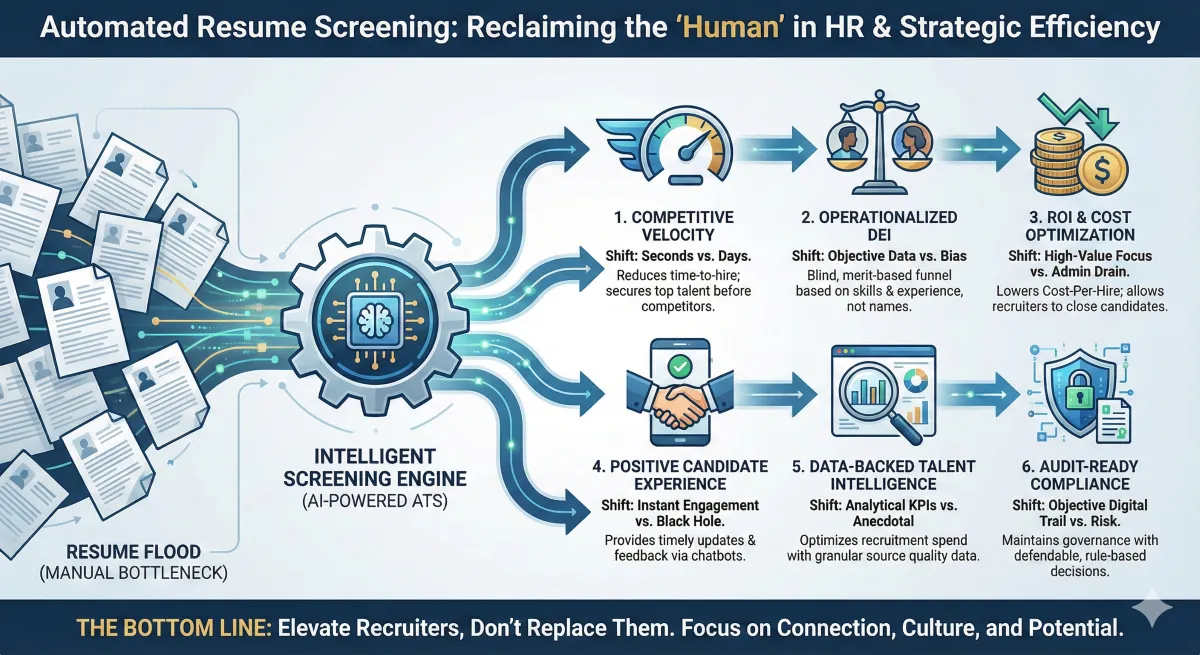
At a strategic level, automated screening software acts as your 24/7 gatekeeper. Integrated directly with your Applicant Tracking System (ATS), it utilizes advanced parsing technology to convert static documents (resumes) into structured data.
Instead of a recruiter spending 6 seconds scanning a resume for keywords, the AI analyzes the entire document against your pre-defined success criteria—skills, experience, education, and proximity—instantly ranking candidates based on statistical fit.
The Strategic Imperative: Beyond “Saving Time”
While speed is the obvious benefit, the value of automation runs much deeper for a mature HR function.
1. Velocity as a Competitive Advantage
Top talent stays on the market for an average of 10 days. If your team takes three days just to screen resumes, you have already lost.
- The Shift: AI reduces screening time from days to seconds. For high-volume staffing environments (particularly in competitive markets like India), this velocity ensures you are the first to interview, not the last to review.
2. Operationalizing DEI (Diversity, Equity, & Inclusion)
Unconscious bias is an inherent human flaw. We inadvertently judge candidates based on names, universities, or formatting choices.
- The Shift: Automated screening standardizes the evaluation. It assesses candidates purely on job-relevant data points. This creates a blind, merit-based funnel that naturally widens your talent pool and supports equitable hiring practices.
3. ROI and Cost Optimization
Calculate the hourly rate of your recruiters. Now, calculate how many hours they spend reading unqualified resumes. It is a massive financial leak.
- The Shift: By automating top-of-funnel activities, you significantly lower the Cost-Per-Hire. You allow your recruiters to pivot to high-value activities: relationship building, cultural assessment, and closing candidates.
4. The Candidate Experience Gap
In an era of employer transparency, the “resume black hole” destroys brand reputation.
- The Shift: Intelligent automation allows for instant engagement. Candidates receive immediate feedback or status updates (often via integrated chatbots). A responsive brand is a desirable brand.
5. Data-Backed Talent Intelligence
You cannot improve what you do not measure. Manual screening is anecdotal; automated screening is analytical.
- The Shift: These tools provide granular KPIs—screening velocity, source quality, and pass-through rates. This data empowers HR leaders to optimize job descriptions and recruitment spend based on facts, not feelings.
6. Audit-Ready Compliance
For HR Consultancies and enterprises, governance is non-negotiable.
- The Shift: AI creates an objective digital trail for every selection and rejection decision. This auditability is crucial for maintaining compliance with employment regulations and defending hiring decisions.
The Bottom Line
Automated resume screening is not about replacing recruiters; it is about elevating them. It removes the robotic element of the job so your team can focus on the human element: connection, culture, and potential.