

In the modern talent landscape, relying solely on job boards and passive recruitment portals is no longer sufficient. While these traditional channels have their place, they often result in high volumes of low-relevance applications (noise) rather than high-quality leads (signal). Forward-thinking organizations are increasingly pivoting to a more reliable, high-yield strategy: The Employee Referral Program.
By operationalizing the professional networks of your existing workforce, you transform your employees from passive staff members into active brand ambassadors and talent scouts. This isn’t just a hiring tactic; it is a strategic maneuver to secure a competitive edge. Here is why top-tier organizations—from global tech giants to specialized recruitment firms—are prioritizing robust referral ecosystems.
1. Accelerating Recruitment Velocity
In recruitment, time is money. Every day a seat sits empty is a day of lost productivity.
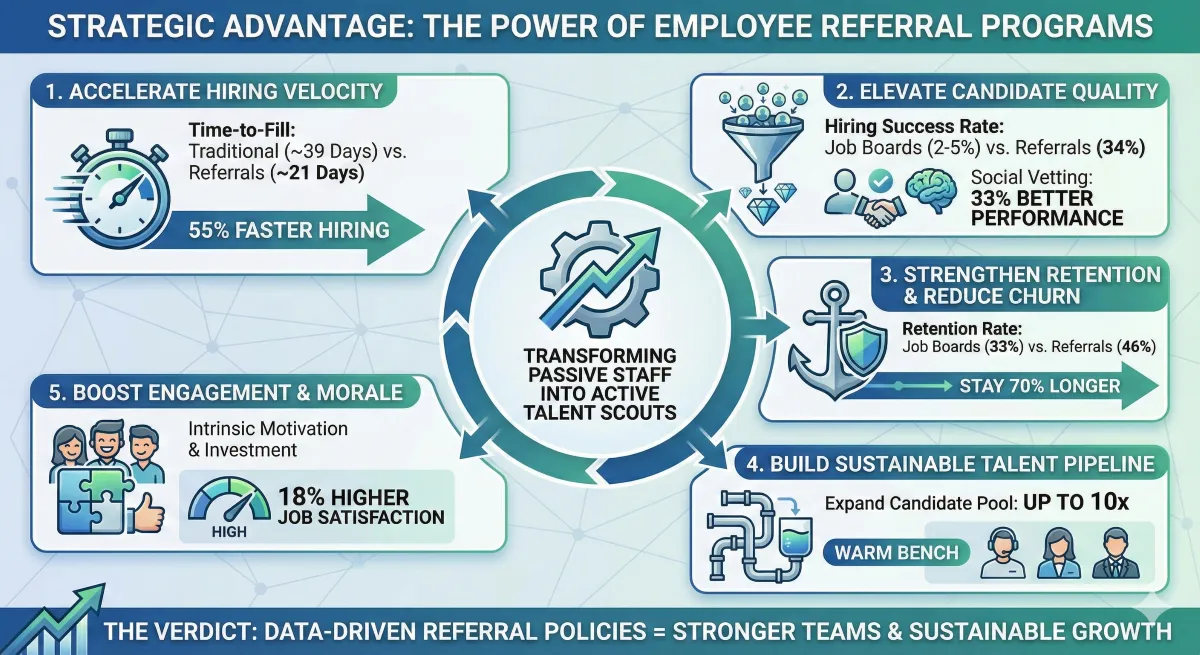
- The Data: Referral programs drastically reduce “time-to-hire.” Studies indicate referred candidates are hired 55% faster than those sourced through conventional channels.
- The Impact: While traditional sourcing can drag on for 39 days, referral-based hiring can close positions in as few as 21 days. This agility allows businesses to maintain operational momentum without costly delays.
2. Unmatched Quality of Hire
In Talent Acquisition, quality always trumps quantity.
- The Conversion: Referred candidates boast a 34% hiring success rate, significantly outperforming the 2-5% average seen from job boards.
- The “Social Vetting” Effect: Even though referrals make up only ~7% of the applicant pool, they often account for 45% of successful hires. Why? Because employees rarely recommend candidates who lack the necessary skills or work ethic—their own reputation is on the line. This natural vetting results in new hires who perform 33% better than non-referred counterparts.
3. Strengthening Retention and Reducing Churn
Employee turnover is a massive drain on institutional knowledge and budget. Referrals act as a natural retention filter.
- The Commitment: Research highlights a 46% retention rate for referred employees (vs. 33% for job board hires).
- Longevity: Referred hires tend to stay 70% longer, with half remaining for three years or more. Because they enter the organization with a pre-existing social connection and a clearer understanding of the culture, the “culture shock” is minimized, and loyalty is maximized.
4. Building a Sustainable Talent Pipeline
Reactive hiring is stressful; proactive hiring is strategic.
- By encouraging employees to share opportunities, companies expand their potential talent pool by up to 10x.
- This creates a “warm bench” of talent—a pipeline of qualified professionals who are already aware of your brand through their peers—reducing dependency on expensive external agencies when new roles open.
5. Driving Engagement and Intrinsic Motivation
A referral program is also a powerful engagement tool.
- When employees actively participate in building the team, they feel a deeper investment in the company’s success.
- More Than Money: While bonuses are attractive, many employees refer candidates primarily to help a former colleague or to strengthen their own team.
- The Result: Referred employees report 18% higher job satisfaction, contributing to a more positive and collaborative work environment.
The Verdict
Employee referrals have evolved from a passive “nice-to-have” into a strategic imperative. A structured referral program delivers measurable business impact by maximizing efficiency, ensuring cultural fit, and driving retention. Organizations that implement data-driven referral policies are not just hiring better; they are building stronger, more resilient teams positioned for long-term growth.