The business landscape of 2025 is no longer defined just by competition—it is defined by adaptability. In an era driven by rapid innovation and shifting workforce expectations, talent management has graduated from a support function to a critical business driver.
What is modern talent management? It is more than just hiring; it is the strategic architecture of acquiring, nurturing, and retaining the human capital required to meet long-term organizational goals. As workplace dynamics transform, relying on outdated methods is a risk companies cannot afford to take.
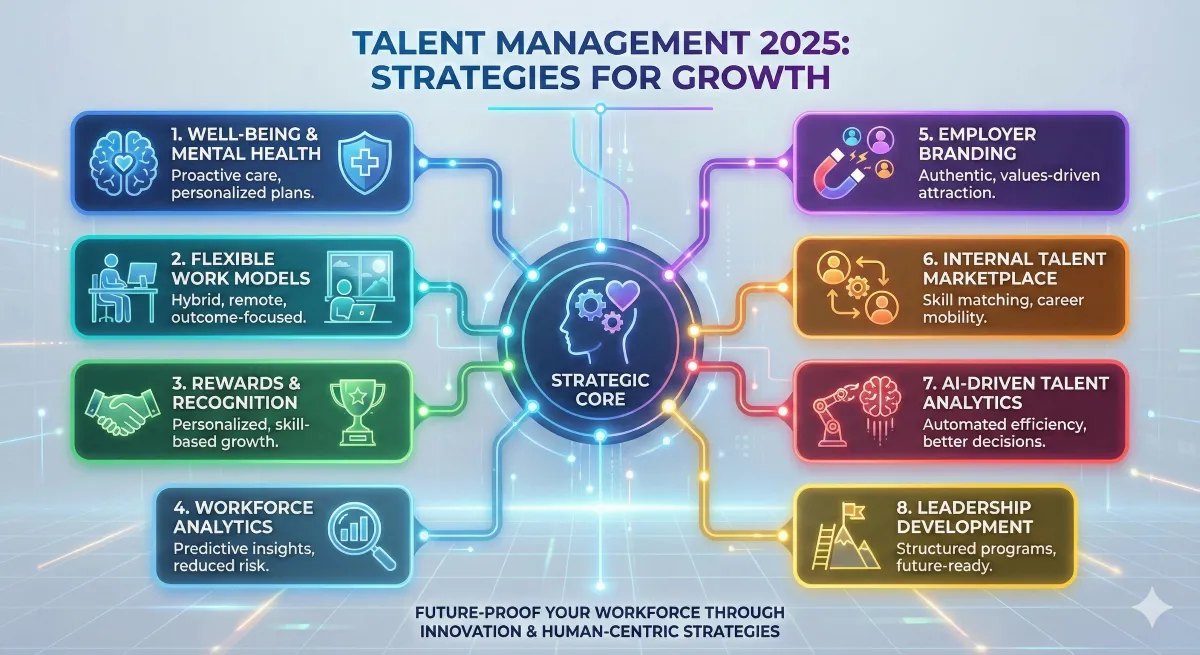
To succeed in 2025, organizations must pivot from managing people to empowering potential. Here are the eight defining strategies for the new era of HR.
1. Elevating Well-being to a Business Imperative
Mental health is no longer a perk; it is a pillar of productivity. Forward-thinking employers are shifting from reactive support to proactive wellness ecosystems, offering counseling, personalized health plans, and stress management resources.
- The Strategy: Partner with specialized staffing companies in India to integrate these well-being initiatives with culturally nuanced communication channels. When employees feel psychologically safe, retention rates rise, and innovation thrives.
2. Redefining Flexibility with Structure
The debate between remote and in-office work is over; hybrid flexibility is the winner. However, flexibility without accountability creates chaos. The most successful companies in 2025 are those that offer autonomy while maintaining rigorous performance standards.
- The Fix: Implement robust digital collaboration tools and clear KPIs. This ensures that flexibility acts as a catalyst for productivity, not a barrier to it.
3. Hyper-Personalized Rewards and Recognition
A generic “Employee of the Month” program is no longer sufficient. To boost genuine engagement, recognition must be timely, authentic, and personalized.
- Beyond the Paycheck: While financial incentives remain vital, the modern workforce values professional growth. incorporating mentorship and skill-building into your rewards system creates an emotional bond between the high-performer and the organization.
4. Leveraging Predictive Workforce Analytics
Data is the new currency of HR. Leaders are moving away from “gut feeling” decisions toward evidence-based strategies. Predictive analytics can now forecast turnover risks and identify skill gaps before they become critical issues.
- The Advantage: By integrating these insights—often with guidance from a top HR consultancy in India—organizations can proactively design training and retention strategies, significantly reducing costly hiring errors.
5. Building a Magnetic Employer Brand
In 2025, candidates interview the company just as much as the company interviews them. A strong employer brand is your primary differentiator. Top talent gravitates toward transparency, inclusivity, and social responsibility.
- The Reality Check: Branding must align with the internal employee experience. When your external promise matches internal reality, you create a self-sustaining pipeline of top-tier talent.
6. The Rise of the Internal Talent Marketplace
Why look outside when the perfect candidate might already be on your payroll? Internal mobility programs are evolving into dynamic “talent marketplaces” that match existing employees with new projects or roles based on skills, not just job titles.
- The ROI: This approach drastically reduces recruitment costs and signals to employees that their career growth is a priority, fostering deep organizational loyalty.
7. AI-Driven Efficiency and Human-Centric HR
Artificial Intelligence is not replacing HR; it is liberating it. By using AI to automate screening, scheduling, and data processing, HR teams can reclaim their time for what matters most: strategy and human connection.
- The Balance: Use AI for speed and data accuracy, but ensure human empathy remains at the core of final decision-making.
8. Cultivating Resilient Leadership
An organization is only as strong as its next generation of leaders. Leadership development in 2025 requires real-time project exposure and structured mentorship, not just classroom training.
- The Goal: Building a “bench strength” of managers who are ready to navigate crisis and change ensures business continuity and long-term resilience.
The Verdict
The winners of 2025 will be the organizations that successfully blend high-tech analytics with high-touch human strategies. By prioritizing well-being, leveraging AI, and fostering internal mobility, companies can build a workforce that is not just skilled, but truly unstoppable.