In the modern industrial landscape, capital and technology are accessible commodities. The true competitive differentiator is human capital. People are the architects of design, the drivers of manufacturing, and the voice of your brand. Consequently, the ability to identify, attract, and retain a high-caliber workforce is not just an HR function—it is a critical business imperative.
This is where the expertise of professional manpower consultants becomes invaluable. Currently, over a million enterprises rely on these strategic partners to transform their workforce from a simple operational resource into a catalyst for growth.
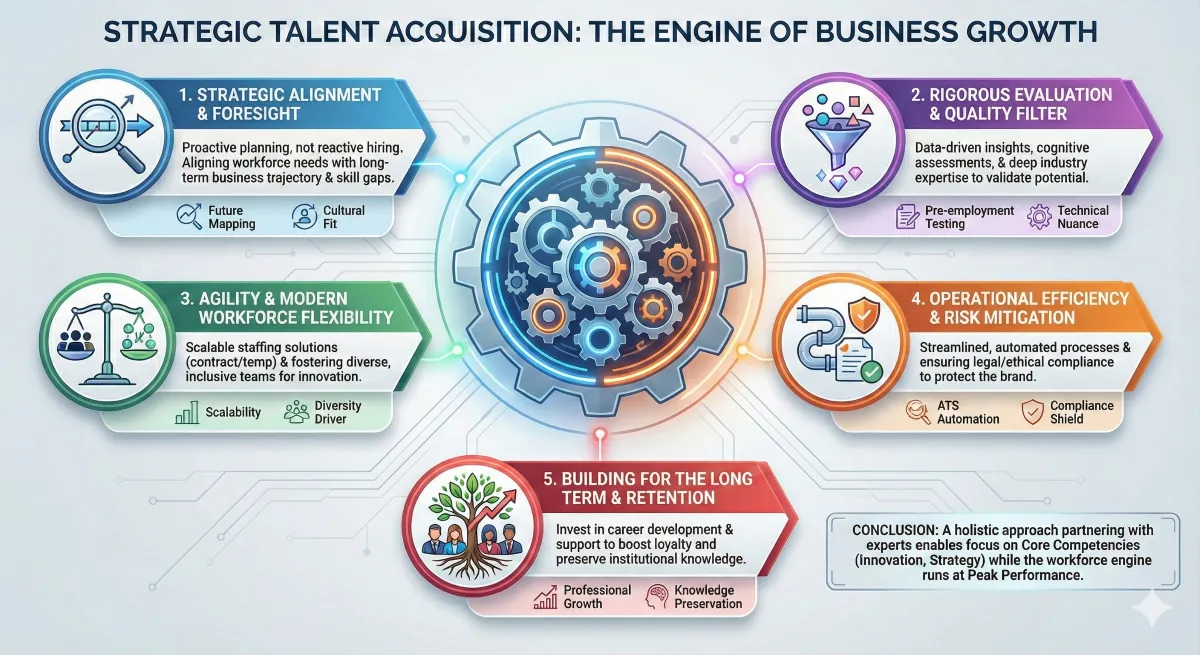
1. From “Hiring” to Strategic Alignment
Effective staffing goes beyond filling a vacancy; it requires a deep understanding of organizational trajectory.
- Strategic Manpower Planning: Rather than reactive hiring, leading organizations forecast future requirements to address skill gaps proactively. This ensures agility during periods of restructuring or rapid scaling.
- Precision Job Matching: A specialized manpower recruitment agency does not just match resumes to job descriptions; they align candidate aspirations with organizational culture. This “cultural fit” is the primary predictor of long-term employee satisfaction and reduced turnover.
- Targeted Sourcing: The search for top-tier talent is proactive. It involves leveraging diverse channels—from digital platforms to academic partnerships—to uncover passive candidates who aren’t just looking for a job, but for a career-defining opportunity.
2. The Rigor of Evaluation
Identifying a candidate is easy; validating their potential is complex. A robust recruitment process acts as a quality filter.
- Comprehensive Screening: Beyond standard interviews, modern recruitment involves rigorous cognitive and personality assessments. For example, leading manpower consultancies in hubs like Bhubaneswar utilize pre-employment testing to provide data-driven insights into a candidate’s problem-solving abilities and behavioral traits.
- Industry Expertise: Generalists often miss the nuances of technical roles. Recruitment professionals with industry-specific knowledge ensure that candidates possess the precise technical competencies required for niche sectors, streamlining the selection process.
3. Agility and The Modern Workforce
The traditional 9-to-5 permanent roster is evolving. Organizations today require a fluid workforce strategy.
- Scalability & Contract Staffing: Business demands fluctuate. Leveraging temporary and contract staffing solutions allows organizations to access specialized skills for short-term projects without the long-term overhead. This flexibility is crucial for maintaining a competitive edge in volatile markets.
- Diversity as a Driver: Innovation thrives on diverse perspectives. In partnership with forward-thinking consultancies in regions like Kochi, organizations are actively building inclusive teams. A diverse workforce doesn’t just meet compliance standards; it mirrors the global marketplace and drives creative problem-solving.
4. Operational Efficiency and Risk Management
Outsourcing recruitment is not merely a convenience; it is a risk mitigation strategy.
- Streamlining Processes: Lengthy hiring cycles cost money and lose talent. By automating routine tasks and utilizing advanced Applicant Tracking Systems (ATS), consultants—such as those operating in Madurai—ensure a frictionless candidate experience that reflects positively on the employer brand.
- Compliance & Liability: Navigating the labyrinth of labor laws and anti-discrimination regulations is critical. Professional agencies ensure that every step of the hiring process is transparent, ethical, and legally compliant, protecting the organization from potential litigation.
5. Building for the Long Term
Ultimately, recruitment is about relationships. Successful talent acquisition extends into retention strategies, such as career counseling and professional development support. When employees feel supported in their growth, loyalty increases, and institutional knowledge is preserved.
Conclusion
Talent acquisition is a multifaceted ecosystem involving planning, compliance, psychology, and strategy. By embracing a holistic approach and partnering with expert consultants, businesses gain the freedom to focus on their core competencies—innovation, strategy, and growth—while resting assured that their workforce engine is running at peak performance.